
Even though I’ve been writing about menswear “philosophy” (if you can even call it that) for the past three years, it’s wild to me that making the connection between menswear and art is a relatively new approach to me.
This is because I obviously find that connotation quite silly. After all, art in my head requires a lot more “material” to work with: painters, sculptures, and poets all create something from nothing. Wearing clothes does not compete. If an interest in clothing is going to be related to art at all, it should come from the design side. I do think it would be laughable to consider consuming an art. But that being said, I do think there is something different in the way that my friends and I approach this hobby. It is more like a personal art, like sketching, painting, or photography for fun.
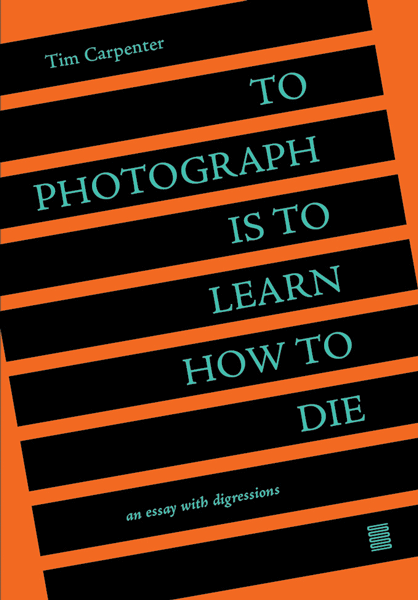
That last part is what brings me to the latest book I read: Tim Carpenter’s To Photograph Is To Learn How To Die. I picked it up at the Acid-Free Book Fair shortly after coming back from my Italy trip. And honestly, it might be the best thing I’ve ever read because of how much resonance I had with it. It just might beat the one on Musical Expression.
The book explores the process of creating an aesthetic object (art), the conflict between such an object being true to ourselves and the world, and ultimately how photography plays into that world. In order to properly confront these topics, Carpenter needs to address elements of philosophy, self, and art, which is why the chapters are full of quotes from a variety of creatives: poets, authors, philosophers, and songwriters. The book is full of long tangents (the footnotes are basically mini essays in themselves), all meant to support the singular one cohesive view that photography is inherently useful in its expressive merits of “what is” and “what is not”.
Boy did it work. I truly believe that this book is the best explanation of my philosophy toward not only getting dressed, but to everything. I honestly think that if I ever wrote a book, it would be this one, but just about menswear. And so I’m going to try and do that now.
This is a response/reflection to the entire book, so I suggest reading it for yourself if you don’t want to be “spoiled”. However, it’s an essay with a thesis, so I’m not sure you can even be spoiled. But you’ve been warned!
In the early parts of the book, Carpenter makes clear that his concern is with the relationship between “what is” and “what is not”. After all, art will never fully represent the real and the imaginary, what is out there in the world and the limitless possibilities of the self. We will always fail both as “no medium can extract from you what you so desperately want to get out” and that “we can not speak, or sing or draw, truly of the world that we interact with”. This is the fundamental struggle that all people must confront. It is also the something that artists use to make something from.
Artists tend to not follow Plato’s belief that art is a pale imitation of life. Instead, they follow Aristotle and Lionel Trilling, who uphold that art is a fiction. It is the earnest pursuit of capturing something of this struggle that makes it worthwhile. This is because an aesthetic object should by about something not “a bullet point supporting a thing or a concept external to it”. Carpenter then quotes Robert Adams who says that “the point of art has never been to make something synonymous with life…but to make something of reduced complexity that is nonetheless analogous to life and can thereby clarify it”. The message/point of an aesthetic object can be complicated or straightforward, but whatever the it is, the object’s creation is ultimately is about making a new relationship to what is and what is not.
This is where discussions then come in about the technicalities of creating an aesthetic object. While we can look at a poem, read a book, or look at the photo, the truth is that the art was there even in the process. After all, the choices, or ethics, we make to form the aesthetic object play into how this aesthetic relationship is formed and even reveals a lot about ourselves. As a result, artists are constantly thinking, observing, and engaging, being a blank slate in the sense that they take in everything the world has to offer.
Carpenter does admit that painters and poets have more freedom in the way they create their objects, but photography is special because of the fact that it is more tethered to the world. A camera allows us to honor what exists while simultaneously giving us freedom to create relationships between the things exposed in the photograph. We are to maintain awareness that the photograph is not representation, but an articulation, which is why Carpenter constantly suggests decreation or “rigorous security of one’s self” as well as prioritization by choosing what is worthy and what is not. In other words, we should take freedom in the opportunity to form relationships and find purpose.
Using the camera is inherently creative and decorative, a process of “constant and…formal calibration [that] can instruct the chaotic and improvised form-making of our everyday lives”. It ultimately creates something that “reconciles the profound constraints of self—by modeling them as disciplined relationships within the photograph”.
It is in that activity that we achieve freedom, the affirmation of life. And in that sense we die.
We also learn how to wear menswear.
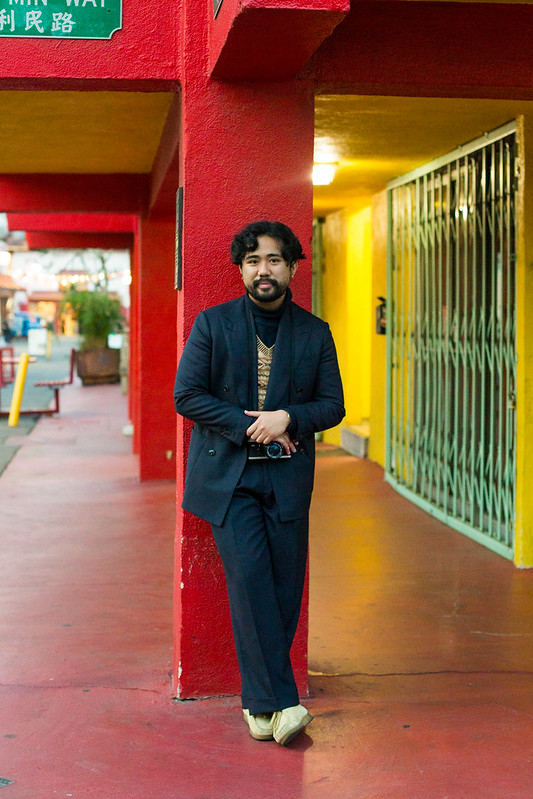
The entire book as outlined above is exactly how I’ve wanted to talk about menswear.
Right off the bat, Carpenter’s entire thesis addresses one of the main issues people have with a clothing hobby. If we assume an outfit is like a photograph (or an aesthetic object), then it becomes a canvas to display our relationships with the world. Granted, most people tend to have a shallow or pragmatic view of clothing (just like how not all writing is poetry or fiction), but when it is in the hands of a creative (or someone who sees their clothing as a canvas), such things take on a new meaning and overall intention.
The Outfit becomes a place ripe for expressing “what is” and “what is not”, upholding and subverting relationships all through the use of how we pair garments together which also contain their own relationships. Dressing in ivy does not make us a professor or a student, but we do it anyway to show how we articulate our relationship to that idea. Combining elements further, whether in a holistic outfit (that is straightforward trad or a subversion) or with individual items (like a casual tweed suit with “formal” peak lapels), are creation and decreation at work. It also is not that serious. Dressers aim to make an articulation of our ideas, not a representation. We also do not get dressed to lie, but instead to make a fiction.
The fact that most people combine what exists when getting dressed (as not everyone designs/sews their own clothes) only echo Carpenter’s points about limitations and how it makes the camera special compared to painting and poetry. Wearing what we have is what keeps us tethered to the world and is another relationship to leverage in our aesthetic object (the outfit). This is most apparent within the genre of menswear, as this niche is built upon referencing the rich past of tailoring. It is unique in how much of it is limited, which then gives us freedom, especially in the Post-Pandemic world where we can create our own contexts.
Carpenter even addresses this existential question by quoting Martin Hägglund who says that when we “engage the question ‘what should i do?’ we are also engaging the question ‘who should I be?’…there is no answer to that question. This is our spiritual freedom.” This sounds a lot like my advice on starting out with a POV, doesn’t it? Those of you who know me well will remember that POV is always where to begin; if you’re aiming to be pragmatic, then none of this is for you.

On another note of camaraderie, Carpenter’s discussions seem to hint toward the importance of taste. As limitation invites freedom and agency, it also invites humility (when combined with regular decreation). This stems from the concept that cameras (and menswear) are connected to the existing world. In order to create the aesthetic object, we are required to respect the impersonal, transient, and actual world on its own terms. As much as we’d like to change it, we must realize this fact, which is what should bring about humility.
Photographers have chosen this medium that inherently limits their transformative abilities for their aesthetic objects, but still invites decreation. Choosing classic menswear as your intentional and expressive mode of dress is quite similar.
Carpenter quotes Iris Murdoch with how “the humble man…sees himself as nothing [and] can see other things as they are”. The author then moves to Flannery O’ Connor who said “it requires an equal humility and a real love of the truth to raise oneself and by hard labor to acquire higher standards”. I agree wholeheartedly here, as everything I do brings me further into my relationship with the world, all the while reinforcing my specific taste. Carpenter even says that “acquiring higher standards in life is possible if we are unsparing in our assessments of the things we make”.
This whole thing is an interesting concept because I’ve been confronted with it before. Despite my strong preferences in aesthetics, I don’t believe that it is the most correct (or best) way to dress. I know that my style won’t hold water with many people and their lives. But that is so freeing. If we are constantly aware of just how small we are in the grand scheme of the world, such as how my little menswear look is nothing compared to Fashion or mainstream attire, then this humility only serves to help us create our fictions. It gives us our freedom.
Now you may be thinking, “this overall philosophy is all well and good, but photography is still much different than getting dressed”. And you’re right, it is different. But it is at this point where I realize even more that my approach to dressing may be different than other people. In other words, I approach it much like photography.
Carpenter does indeed spend a lot of the book forming connotations between photography and painting/poetry. As stated before, one way was how closely tethered photography is to the actual world, being an exposure of a literal POV. The other way is in the spontaneity as well as the technical prowess. To take a photo, you must be at the right place at the right time with the right settings. Carpenter is aware of the abilities of a photographer to manipulate the pre and post exposure processes, which he does admit doesn’t carry the right meaning he’s getting at, as it doesn’t get at the natural and the transient.
I think I get dressed in a similar way.

I realize that admission might be a point of contention as many of you are aware that my outfits are made in advance, which might make you think that this falls into the “less meaningful” aesthetic object that Carpenter refers to but let me defend myself a little bit. Within my process, the spontaneity, the actual, the transient all come with the creation of the outfit. I put things together as soon as I get the hankering for it, with very minimal changes (if any) once the “rig” or “form” is complete. This is the exposure of the negative. The developed print is me physically wearing the outfit (often rendered “complete” with an actual fit pic, I try to take the photo near the end of available sunlight).
In other words, my outfit is a literal snapshot of the emotions and relationships I wanted to uphold in a specific and often fleeting moment in time. While I haven’t timed it, I try to make a fit as fast as I can whenever the inspiration strikes. Dwelling too much on the choices or constant editing makes it feel less “real”. Photographers are aware that they are never able to perfectly recreate the photograph. Everything is always different. This may be way I don’t repeat outfits, because the emotions and context I had for that outfit’s creation are already gone. We may as well honor something new that comes our way!
Honestly, I attribute a lot of my style journey to this method; those who know me and have seen me put outfits together in my room can definitely attest to how quick it is (and how large the back log becomes as a result). This even predates the pandemic. I just like to make fits whenever I want, just like I take photos whenever the mood strikes. I am aware that this approach might be unique to me, as I am someone who constantly thinks about fits and is home for extended periods of time that allow me to make outfits on a whim ad nauseam.
The ability to pounce on an epiphany and execute it with full intention and effort is a big part of my personality and it just makes sense that this encapsulates my approach when making outfits, taking photos, and quite famously, how I write my blog posts.
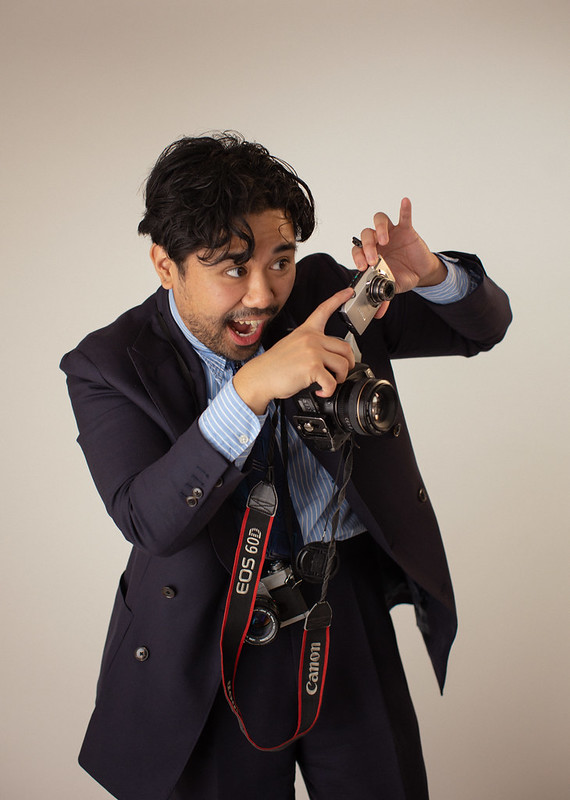
It helps that I have a blank mind, in the sense that I am quite receptive to epiphanies (which Carpenter defines as “moments when the interior and exterior come into…alignment”. I’d call this inspiration and I must always be ready to pounce on them and create when they arise.
I like Carpenter’s use of Minor White: “such a state of mind is not unlike a sheet of film itself—seemingly inert, yet so sensitive that a fraction of a second’s exposure conceives a life in it”. Those who know me well know that I instantly create outfits and put them together as soon as my mind comes up with a prompt. I am just lucky that my “photographs” (outfits) are often well suited to whatever Occasions I have in my life, though it’s also quite true that sometimes I make the Occasions to honor the fit I’ve created. Maybe that would count as a bit of the transformative power that is not present with the activity of photography, but I reconcile this by thinking about it as if I’m simply curating the gallery space to showcase a photographic object.
That being said, Carpenter does give some room for work. The moment of exposure does not make a photograph. Printing and presentation still need to happen for it to become a photograph. To me, the outfit is not “done” until it is worn, but the wearing is still predicated on the fleeting choices made during inspiration, much like how a print is still limited by the actions taken during the moment of exposure. “For the photographer, there is always no tomorrow. The picture, like the poem, must be made now, else…the mood will have passed on”.
It’s now clear to me that just like my approach to photography (the real stuff, not the fit pics lol) and music, my adherence to the moment of epiphany is why this whole hobby feels almost like art. My outfits are truly a form of an aesthetic object, at least in my own little way.
On a related note, MJ even noticed that I hum the same original motifs I hummed back in high school. My biggest creative output was also in high school and early college, where music was my only outlet. As soon as I had an idea, I put pen to paper and wrote it out. I was always prepared to act on my epiphanies.


I know that this may have induced quite a bit of eye rolling, but believe me when I say that this book really does get after the general ideas of creation and taking pride in the limitations of a medium. This book may be about photography, but for me, this may have just been about menswear and getting dressed.
In addition to the main points I brought up, there are countless tangents and footnotes that anyone could apply to menswear (or general art). Much of the writing on humility, fiction, and “fancy vs imaginary” is bound to help reconcile ideas on upholding and subverting existing aesthetics within menswear. There are also a few nods to pragmatism, especially during discussions on the purposeful and purposive qualities of objects (art tends to be purposive and the useless is actually quite useful).
I liked a section on an interesting picture vs a picture of something interesting, where Carpenter asserts that an interesting picture involves a relationship between the self and the world and invites the viewer in as a form of conversation. He addresses the proliferation of images, how it may affect taste in photography, and how no one seems to be concerned with writing and the availability of pencils.
What I find most interesting is that this entire book is about the philosophy behind photography. It does little in the way of prescribing the specifics of good or bad and instead focuses on approach, inspiration, and intention. It ultimately makes for a compelling case for someone to try photography for themselves. To try their hand at a process that is connected to the world in a more literal way that is unavailable in writing and poetry. Even though the book is full of big ideas and references many people I do not know, Carpenter is ultimately positive in his message. So positive that this philosophy is clearly able to be done in a variety of other activities. Like Menswear.
At the end of the day, this whole thing is accessible because everyone does it. Carpenter says that “the photographic enterprise…is really just a specialized or concentrated way in which all people know the world in moment-to-moment experience. I’ve said the same thing about menswear. It really is just about recognizing your agency and finding a medium that can articulate the relationships you have with everything out there in the universe. It is freeing to create this fiction.


I think think it is fun to approach getting dressed like taking a photograph, turning your outfit into a recording of the emotions you felt at that moment. This action, resigning yourself to transience and sticking to it, is what makes the activity of getting dressed and the hobby of wearing menswear come close to being like art. I truly believe in taking steps to make this as personal and as creative as possible in order to separate it from “not being naked”.
When you compare this mindset to how most people get dressed, it will certainly come off as radical or jut flat out weird. But hear me out and try it for yourself in your own way. We should embrace this attempt at fostering camaraderie between wearing menswear and art. Perhaps this is why the people I hang out with (or those who read the blog) tend to also be creative in some way, whether its on a personal level or a public level. It’s clear that they realize that with this admittedly absurd philosophy, stretched loosely (in a positive way), we are all creating aesthetic objects with our chosen medium.
In his book, Carpenter articulately made this connection between photography and painting/poetry. I definitely wanted to m try my hand it with my own thing. As silly as it is, to me, getting dressed can function like photography, being a “weirdly and improbably effective way to turn chaotic experience into meaningful response— in other words, to learn to just get along in the world”.
PS: I know that I am probably way over my head with this one, but it is truly my dream to have people write about menswear in this way. Most menswear tends to revolve around some aspirational life or general masculine confidence. It doesn’t always have to be this way! I don’t think I am the right person to do this and I certainly don’t want to be, but I do believe in making a case for things you like. Maybe someday someone else will accomplish it. And then I can also die.
Thanks for reading! Don’t forget that you can support me (or the podcast) on Patreon to get some extra content and access to our exclusive Discord.
Always a pleasure,
Big thank you to our top tier Patrons (the SaDCast Fanatics), Philip, Shane, Henrik, and Alexander.
 a little bit of rest
8 comments