
I recently had a short conversation with someone in my DMs regarding the lack of a true “Menswear Scene” in LA. Specifically, he was saying how in NYC, there was a bunch of Menswear Guys in the Scene who always had something going on. At first, I told him that this was because there just isn’t much tailoring or fashion here but I quickly recalled that actually isn’t the case anymore. There’s been so much Menswear and Fashion stuff happening here, at least based on what I’ve seen on Instagram and Tiktok from figures like Jon Jawns, Edgy Albert, and others I can’t recall. There certainly is a Scene and it doesn’t seem like I’m in it. When I told him that, he was surprised considering how much I post about Menswear and all the mutuals we have. But when he remembered that all I do is hang out with my non-menswear friends, he started to see what I meant.
That brief exchange was eye-opening to me and revealed my feelings of distance and disconnect from the Menswear Scene as of late. I don’t mean in terms of clothes, as I obviously am making and wearing little outfits everyday (though the fact my beloved white suit shrank severely at the dry cleaners makes me quite sad). No, I’m mainly referring to the Scene: the “lifestyle”, its activities, and the people we spend time with. This is apparent when I compare the socials between myself, my IRL friends, and my fellow Menswear Mfers. I could say that I’ve changed, but maybe it is the “Scene” that has changed as well.
For a long time, I felt that being a Menswear Mfer didn’t necessarily mean that you had to work in the industry. We all dressed “the same” without love of berets, 3-roll-2 jackets, white socks, and loafers. And when it came to our social media presence and what we put out there, it just showed that we liked clothes. It was wholesome and fun. But this isn’t the case anymore. If you’re a Menswear Mfer in the Scene, you are most likely in the industry in some way: a Traditional Influencer, shopkeeper, designer, photographer, and so on. And social media makes it quite apparent the Scene has moved away from Hobbyists and is instead about the Industry itself.
As someone who mainly interacts with menswear online (as I do not work in the industry and only go to events when they happen to be public and in LA), this is mainly through the lens of social media. But to be fair, that’s what the “scene” always was to me: people on forums, reddit, and Instagram who loved clothes. Maybe this is a “through rose-colored glasses” type of thing, but in my experience, social was a separate place from the Industry, outside of brand accounts and giant icons and influencers of course. But this exactly the shift I’m talking about, as it feels like a majority of the content about Menswear and Fashion is now being produced by people in or around the Industry rather than the Hobbyists.
This is easily seen in the socials of guys in the Scene, as I have noticed that they’ve taken on a “new” aesthetic and overall approach to posting the past 3-5 years. Again, I’m not just talking about fit pics transitioning to GRWM videos and abstract dumps that just-so-happen to show your cool outfits. No, I’m talking about how Menswear (and general Fashion accounts) have become more like a Slim Aarons photobook about the Fashion Industry, but one that the user has full agency to curate. It’s been interesting to see this vibe take over my feeds on Instagram and Tiktok…and to see just how much of it is pointed toward the Industry.
Scrolling through my feed now has been less about guys wearing fun outfits in their regular lives but rather about being in Fashion Scene itself. It’s full of attending parties and dinners (official and unofficial) as well as takes on Lookbooks and Culture; it also is full of rubbing shoulders with influential players in Fashion, Media, and Culture as we know it. What’s most interesting is that this used to be the stuff you’d see from already-big Fashion Figures (who are often socialites in their own rights), but now it’s extended to everyone: writer, designer, or a shopkeeper. Everyone is showing off what they do in and for Fashion.
I’ll admit that it is indeed very cool and alluring to see the life that Fashion affords, as well as the inner-workings of various facets of the industry (buying, designing, critique, etc). And granted, using the internet to show off an aspirational lifestyle is nothing new. But there has always been something off about it, in a way that affirms that the Scene is for the Industry and not a regular Enthusiast.


When reflect on the shift I’ve noticed, I’ve felt that content coming from Fashion Mfers tended to come across as a manufactured and posturing-esque, not in a social climbing way but in a professional sense. And as someone who used to posting on social media without the need for it to be tied to my job, it’s a bit jarring.
I’m not even talking about the posts of a Traditional Influencer (which I’ll get into later). Instead, the phenomenon feels a bit more subtle and comes across like a slicker version of what I’ve seen on Linkedin from old college classmates or from the few rise-and-grind I happen to be in contact with. I’ve seen friends go from no bio and the occasion fit pic to now showing the brand of employment, not unlike a Linkedin profile. And Linkedin, like any other social media platform, is meant for self-expression of your opinions and self-documentation of your activities…just in a way that makes you attractive to current and future employers.
Insights on stocks or dental innovations pales (socially speaking) to trend predictions and takes on lookbooks/runways. Photos as well as all the proof that you were invited to a designer’s show or a brand’s dinner. It’s certainly cooler than photos of “post dental conference steaks” that somehow transitioned to public commentary on upcoming dental equipment innovations (a real post I saw on Linkedin). Thes stuff on Menswear Socials is objectively a subtler and yet more sexy version of that approach to social media. But it is still pragmatic, which always felt a little off to me.
Of course this is just me projecting my critical if not cynical extension of my bias against using social media as a pragmatic tool for money, rather than for fun. This is social media. It’s all perceptions. I could have just been wrong about all of this. Maybe we are still using social media the same way, it’s just that I don’t live in NYC and don’t get to regularly see people who happen to work in the Menswear Industry. Naturally if you hang out with Menswear, Fashion, and Media people, your socials will naturally follow.
But then a certain article came out that vindicated a few of my opinions…at least a little bit.

This recent Vogue Business article by Madeleine Schulz was all the proof I needed that there has indeed been a vibe shift in regards to social media as used by Menswear (or Fashion) Peolpe. The title says it all: Instagram (and social media in general) now serves as a resumé or portfolio for luminaries in the fashion industry, and if we are to go off some of these quotes, some are feeling the pressure to put in effort to maintain relevance and ultimately employability.
I find this incredibly fascinating (and slightly vindicating) for a lot of reasons (which is why I’m writing this article). This article proves my sentiments that social media evolved as progress in late stage capitalism. It is no longer a platform for us to express ourselves and dump snippets of our life like when baking cookies, our photos with grandma, and our silly little fits. No, social media is now a public platform for employers to sample the value we can provide them. And this seems to be the practice no matter who you are in the Fashion Scene: designers, authors, brand directors, buyers, and so on.
It seems that to really participate in Fashion or at least be considered hirable, you need to have a brand as well as some sort of following (they call it a “community”. And with something as holistic as fashion, which includes not just aesthetics of clothing but their semiotics in relation to culture and communication, you need to be an intriguing catch all to work in it. Like Julia Saar-Jamois, you must be “an amazing stylist, and also be a muse, or a tastemaker”, with the implication that this needs to be evident on your social media. According to another interviewee, people need to see “who you know…your aesthetic, how you speak about yourself, how you carry yourself”. This cultural truth seems to bring out the compulsion to constantly show that you have the finger on the pulse, that you’re a fashion commentator, in evidence of your fashion and cultural insight.
In that way, your Brand (your expression and taste) and Community (evidence that people agree with you) is the Product or Employable Value that you provide to Fashion Employers. And yes, this makes for an incredibly abstract concept that blends a capitalist view of “value” and authenticity in the most difficult and anxiety-inducing way possible, which is clearly felt by those interviewed for the article. What sucks is that you aren’t even directly compensated for your social efforts; this is just something you have to do in order to stay relevant and employable within fashion and maintain your salary. This is best summed up by Shulz, who says that fashion needs “industry darlings they can utilize beyond a magazine placement”.
This aspect makes this phenomenon markedly different from Traditional Influencers who get their income via simple affiliate links and sponsorships. This is a “publisher-advertiser” relationship, where the influencer is chiefly concerned about brand placements on a particular piece of content (and ensure it performs well). For the figures Schulz refers to, it’s a bit more complicated. Content isn’t exactly the product but it’s also not not the product either. Content is simply an example of what you bring to the table: a mixture of an employee’s thoughts, expressive merit, and social relevance. You have to be everything and have digital evidence of it.
And this brings me to the discernable actual shift in content. I feel like you guys have seen what I mean and can clock these approaches off the bat. It’s almost as if they follow some sort of template, an unspoken best-practices for the “it crowd”. Again, it doesn’t matter if it’s a creative director, designer, buyer, influencer, or even a sales associate— all of them eventually approximate this template.
- A myriad of indie-sleaze style photos from industry events/parties/shows, both big and small and both during and at the “afters”.
- Bonus points if you are seen with (and are followed by) other big fashion names.
- Inspo/moodboard posting involving clothing, interior design, and vibes, showing prowess in consuming art and culture in a way that is more than just fit pics. You can’t have an “off days” when it comes to showing your good taste.
- Bonus points if you have a substack, so you can prove that you’re articulate and can express yourself in more than just curating photos. This is a valuable skill (and certainly employable)!
- Gifted items/flow team posts of new product releases or niche items, showing that you are indeed a friend of various brands (connections people!).
None of these things are as blatant or cringy as a legally approved copy from your sponsor or a discount code that can be found across a Traditional Influencer account. But again, this is still a form of posturing and selling; it’s just yourself and not a product. But the concerning thing may be that this isn’t just needed to be directly employable, but just to be considered relevant in the Fashion Scene to begin with.

Overall, a fashion mfer’s is a resumé, cover letter, CV, and portfolio all rolled into one. But the thing is that it has to be public. For most people, such contrived actions live on Linkedin, a platform dedicated to professional posturing. The benefit is that those in traditional business positions don’t have to sully their Instagrams or Facebooks with such posturing, unless they’re some sort of rise-and-grind guy (which we make fun of accordingly). Relegating that stuff on Linkedin also allows us regular social media people to not see it, keeping our feeds full of silly cats and homemade baked cookies.
However, fashion can’t be in an echo chamber of MBA grads sharing TED talks about workplace efficiency. Posting on Linkedin is antithetical to what Fashion is about. Fashion is “cooler” than that and ultimately much more holistic as it occupies the intersection of arts, culture, and business. For that reason, it seems almost imperative that your Cultural CV be available to be viewed and be in conversation with the world. This might be seen as a form of vetting, so that the public as well as your colleagues and employers can determine your relevancy to approval for participation. This is most likely why we’ve seen all members of Fashion come and share their lives (and opinions) on Instagram, Youtube, Substack, and especially Tiktok.
Schulz addresses this in her article. “The heightened need to be ever-present on social media is ultimately an evolution of what’s always been the case in fashion: people are interested in the lives of those in the industry. Editors and writers were socialites, [Cortne] Bonilla [a blogger turned fashion blogger] points out. What’s changed is that access is easier than ever, and it’s up to the professionals themselves to pull back the curtain, while producing the content that’s behind it.” She goes on to say that only “those talents who have already achieved icon status and are widely recognised within the industry can afford the luxury of not engaging on social media. Even then, such an absence can be perceived as an irrelevant act of fashion snobbery.”
In other words, it seems like people in Fashion are cursed to have a double duty: to not only keep Fashion relevant in their day job, but to keep themselves relevant so they can continue to do so.
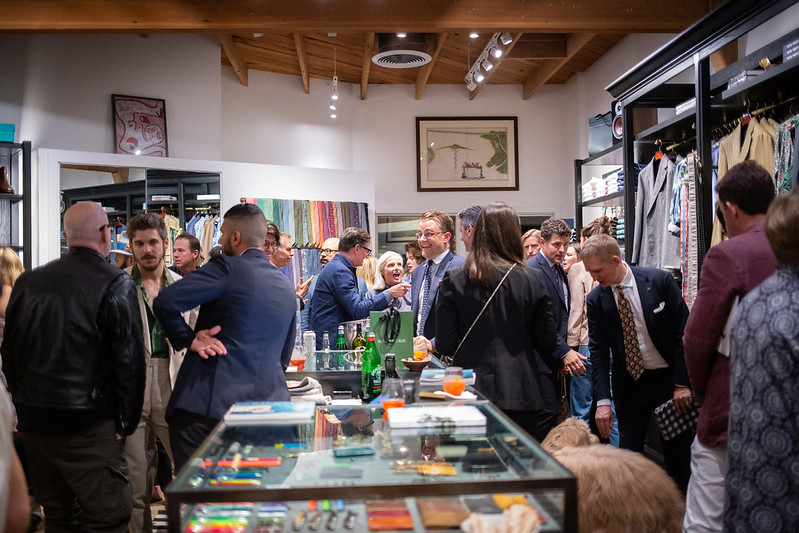
To me, all of this has shown that Fashion is one of the latest industries that seems to require your online presence to be a blend of your personal and professional life. At first, this was only if you wanted to be an Traditional Influencer, where the point was to have a life worth monetizing. But now it’s different. Schulz seems to say that you need to use social media to have a life worth hiring.
Of course, this is nothing new in late-stage capitalism. Musicians, actors, and artists have all made the shift into using social media as their resumé and portfolio. It’s the way to stay relevant, become discoverable, and if you happen to get big enough, can be the deciding factor in a job or can even serve as a side income itself. People have accepted this and it has become a must for any sort of entrepreneur. And while I can see that for those in Fashion closest to being gig workers (writers, producers, models, photographers), it is a bit concerning that everyone does it. Again, there is a discernible “vibe” to Fashion on social media that feels like a subtle CV and Schulz’s article only validates that idea.
Maybe the truly sad part is that all of this makes working in Fashion (or even being a part of the Scene) feel temporary, not unlike a gig. Brands, trends, and even people are getting cycled out of the zeitgeist at breakneck speed, which makes that feeling become quite accurate. It can make one feel less like a salaried employee and more like an hustling entrepreneur. After all, your participation in the space is dependent on how relevant you are and what you contribute to the zeitgeist. Considering Fashion’s role in Culture, this is to be expected. You have to do what you can to keep up. Publicly.
It also turns the employee (or Fashion Scene Hopeful) into a willing vehicle for PR, so that brands and publications can continue to increase their own relevance in the world. It’s like seeding gifts to Traditional Influencers but with a bit more connection to the “real heads” instead of an audience that still buys fast fashion. It’s a win-win for everyone involved: the hopefuls get “content” to wear as a badge of honor…or an entry in their CV. Again, it all makes sense but I can’t feel a little too self aware about it.
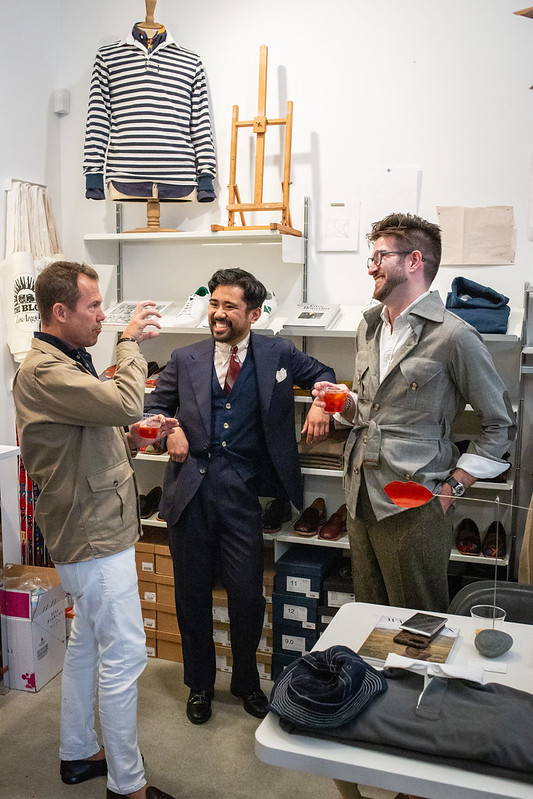
I guess this is on my mind because I’ve seen so many of my mutuals transition into this type of posting. This makes sense as many of them have turned their menswear hobby into their career, whether it’s by becoming a Traditional Influencer, being a shopkeeper, or behind the scenes at a brand or publication. And while I have many mutuals who have been in the gig economy and already have Portfolio-Instagrams, I guess it’s been jarring to see this break into a space that I considered a hobby above anything else. Maybe this was to be expected, since after 10 years of being heavily into menswear, I was bound to have made friends who are into this whole thing in a way that was more than just buying and wearing clothes.
Perhaps this difference is why I feel cynical about this whole thing and even even “left out”, by which I mean I am all too aware of the differences. Ultimately, I think this whole thing goes to show that “Fashion as a hobby” isn’t really a thing. Instead, the hobby is a stepping stone on the way to achieving “fashion-as-a-career”, or at the very least “fashion as a Side Hustle”. In fact, this may even be true of social media, where it can feel like people are on it not for fun, but to make money. And when you want to make money, there are definitely smart moves to do to ensure you get it.
I’m all too familiar with social media’s templates and best practices for followers and engagement, which for me, gets away from wearing clothes for fun. This is especially true when it gets tied to the industry, whether it’s through functioning as a PR funnel (Traditional Influencer) or showing your sway, participation, and employability as a Figure in the Industry. In other words, it’s not really a hobby, but an avenue for gathering money. As a result, it becomes difficult to determine whether or not someone would wear or say something of their own volition if it wasn’t a contractual obligation, a gift (an implied obligation that most gifters follow through on), or because they know it will elevate their position in the zeitgeist and serve as leverage in the Fashion Scene.
But I know that’s silly to project. I’m just over thinking this and being too negative. Kinda.

This whole blog post is a bunch of conjecture and me “yucking their yum”. The truth may be that they all enjoy this and that being able to document these happenings is a positive part of the Fashion Scene. Like Schulz mentions, it is great to see the people behind-the-scenes (of all levels) get attention and be treated like socialites or the elite; audiences definitely love to see it. And if I’m being honest, the connections generated from this Scene seem to be quite genuine and many of my mutuals have been able to jump start their dreams thanks to effective use of social media. It is sexier than Linkedin, even if the implication is that you need to constantly be cool and relevant (to the right people of course). That challenge is something that probably attracts people to Fashion to begin with.
I think it’s clear that isn’t the case for me. I just wanna wear clothes for fun (and maybe ponder about why it’s fun). I also want to post on social media for fun. Both of these wants relies on authenticity and personal taste— with an emphasis on the personal part.
My point is that I want to make sure that there is always space for posting about fashion purely for fun without any career or monetary aspirations. It’s perfectly possible to be heavily into menswear and talk about it without following the template, worrying about metrics, or even being publicly documented that you are accepted in that world. Of course if that stuff happens it should be a bonus, not a never ending challenge.
Having my social presence or following is tied to my career is something I never want to have. Schulz’s article reveals the struggles and anxieties of that reality, as the Fashion Industry becomes the latest victim of a gig/hustle mentality. I’m actually grateful that I only had to worry about my resume and regular business networking, without having to “show off” on my Instagram or Tiktok (which doesn’t have many followers anyway) or really leverage the content of my blog or podcast. I just can’t imagine how I’d feel if I felt like I had to start to post about what it’s like to work at my job, only to use it as a bargaining chip for my employability.
And even now, a few days after Schulz’s lightly critical article on this phenomenon, there are already people affirming it and sharing suggestions on how to up your IG game in order to play the game. *Sigh*

All this to say that I’m still sad that being i Scene is about the Industry. But maybe that’s all it was really meant to be. In the end, capitalism wins.
You see, I am above all, a fan of social media. I genuinely enjoy using it whether it’s this blog or my instagram. It is meant for fun. Not only is it a great place to post my thoughts on menswear, film score, and overall culture, but it’s also my avenue for sharing the photos I take of my friends and family (be they portraits or digicam flash pics). It’s a diary for my thoughts, a documentary of what I do, and a place for self-expression.
It goes without saying that I also enjoy seeing my friends do the same thing, all through social media. Be it Instagram or Tiktok (I use Facebook for family and I don’t use twitter) posting helps us stay connected and can even expand our experiences and taste. I’ve learned so much stuff from my mutuals, be they fashion related and not. Our social media accounts will always be a curated reflection of our lives and interests but that’s why I think its best done without the introduction of money or work.
I will admit that I am in a very lucky position to not have to rely on social media for my job. I know that this isn’t the reality for a lot of people, let alone the creatives. Quite a few of my friends got started in their careers before social media and have had to learn quickly up in order to maintain relevance (and therefore potential employability). Maybe someday I’ll be forced with that reality and will have to start making content about best marketing practices and approaches to digital advertising. (Blah).
I know that this all seems a bit rich coming from someone whose social media is nearly completely “menswear content”. Yes, I do include the blog and podcast in my bio. But I think of it more like my friends who have a separate account for their crochet and baking projects. It’s there to show off but not necessarily for an employer (or sponsor). I’ve also made it a point to consolidated my fit pics into dumps so that it provides breathing room for the other stuff I like to post: photos of friends and the hang outs we do. Calling it just menswear content is a bit disrespectful to the other stuff I have on my feed. I’ve always intended my social media presence to be reflective of the actual life I lead everyday..and not my job. Overall, my essays on Tumblr are key in understanding my approach to social media and my earnest enjoyment of both the medium and fashion itself.
EDIT: To be clear, its still possible to be into Menswear or Fashion without being in the industry. After writing all of this, its clear that the Scene of Enthusiasts still exists. It’s just in group chats and Discords. It’s a little less public and a bit haphazard, but that’s the scrappiness that I’ve felt has been missing from the “IRL” Menswear Scene. It is here where we can discuss Collar Roll and inspo without it being translated to the Industry. Discord has been where I’ve refound the Community and as a result, is where almost all of my menswear energy has gone, while my Instagram has been relegated to non-menswear stuff…outside of my outfits of course.
I wrote all of this because it’s becoming increasingly clear that social media is constantly transitioning to be an additional avenue to display just how employable we are. I hate that. For me, social media (and fashion) is an escape from work. Both of them are an activity for me to be who I want to be, to create my own Occasions, and focus on what I enjoy instead of employability and best-practices. After all, applying those things to my social media doesn’t really do anything for me or get me what I want.
In the end, all I want my social media to do is record my outfits and take photos with and of my friends. That’s what my life is about, not my work.
[This probably isn’t the best thing to share before my NYC trip but its just been on my mind for a long time and after Schulz’s article, I finally got the gumption to share my thoughts!]
-end of blog post-
Thanks for reading! Don’t forget that you can support me (or the podcast) on Patreon to get some extra content and access to our exclusive Discord.
Always a pleasure,
Ethan M. Wong (follow me on IG)
 a little bit of rest
Interesting thoughts Ethan!
From my non-influencer view, I think the old line between earnest-posting and cringe has blurred. Of course, this has good and bad outcomes. Posting as profession created an interesting pathway for diverse voices who widen societal boundaries. Yet, it did further reduce posting towards status game, opposed to means of enjoyment and connection.
However, we can’t look at the influencer in isolation. Mainly as the audience accepts the necessity of an influencer’s self-promotion as inherent to their profession. We, or as least I, as audience, want to support those we like, and want to see them grow professionally and personally. Parasocial relationships and all. Yet, I also lament the growing barriers to entry of posting (if you post once, more expectation to keep posting).
In twitter vernacular, as the benefits of posting have risen, so have the costs, thus occasional posters become reply-guys, and reply-guys become lurkers. Mixed results.
Anyway, the internet is fascinating! Great article,
Bruce
LikeLike
Hi Bruce, these are some interesting points! I guess even I’m starting to get a little outdated with my own view on social media…or rather I’m clinging to the old way of things. I hear you on the parasocial-ness of it all. I do try and turn these things into “real friendships” (as is evident whenever I go to NYC) but then I guess this whole thing is what happens when I’m friends with people who work in the industry that I only participate in as a hobby/consumer. It was bound to get jarring the more social media matures as well as the friends I have move up in their positions!
Thanks for reading!
LikeLike